
Many of my clients are children, and this is a question that I hear often from caregivers! I get it- as a mom, and a therapist who has sat through MANY tantrums, I get how frustrating it can feel. Handling a tantrum is, at best, irritating, and at worst, it can feel as though your child’s emotions are causing you to spiral as well. It’s very hard to stay calm when you’re trying to help a child who is actively blaming you, and maybe even hitting/kicking/biting depending on how upset they are.
Before I get ahead of myself I want you to know a few things:
- Good kids have tantrums. In fact, tantrums can be a normal part of a child’s development.
- You are HUMAN. Sometimes you’re going to mess up or lose your cool when trying to support your child. It’s ok.
- There are no easy or quick fixes to tantrums.
- Your job is not to end the tantrum, but to support your child.
Your job as a parent is to model the behavior(s) that you want to see, have healthy boundaries, and use tantrums as an opportunity to learn about the things that your child needs support with. Kids feel all of the emotions that adults do, but, especially when they are young, they have very few tools to be able to communicate their feelings in a healthier way. Our job is not to end the tantrum, but to use it as a teachable moment after your child has calmed down. I repeat- AFTER your child (and you!) have calmed down.
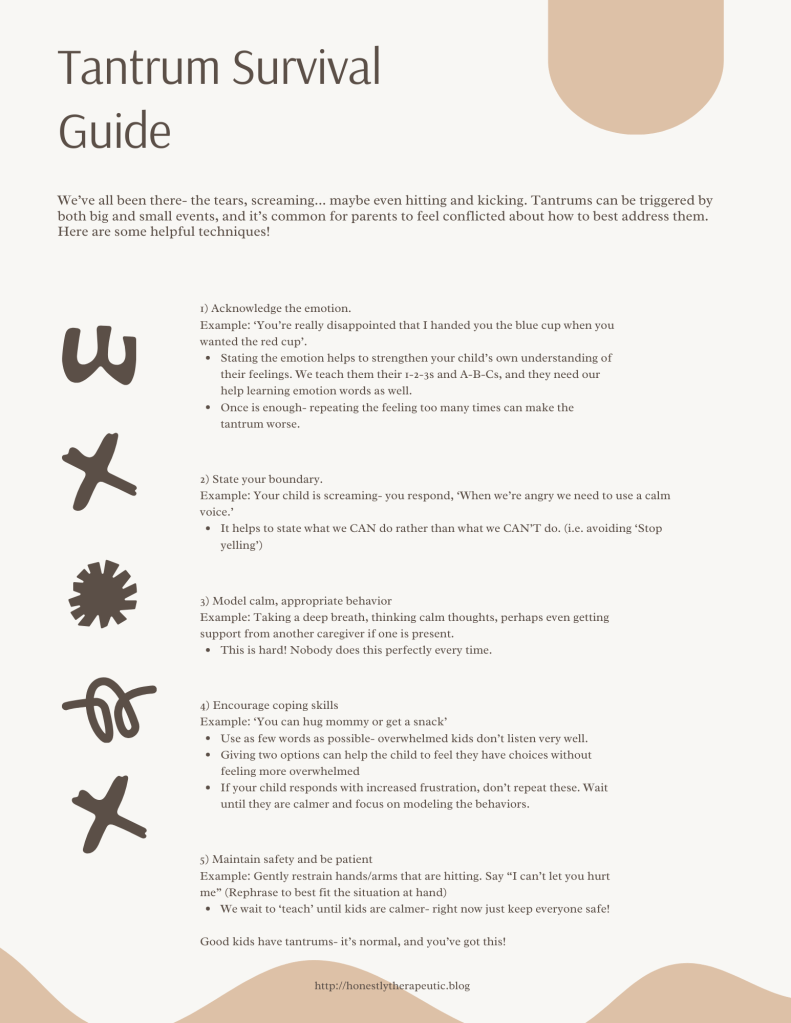
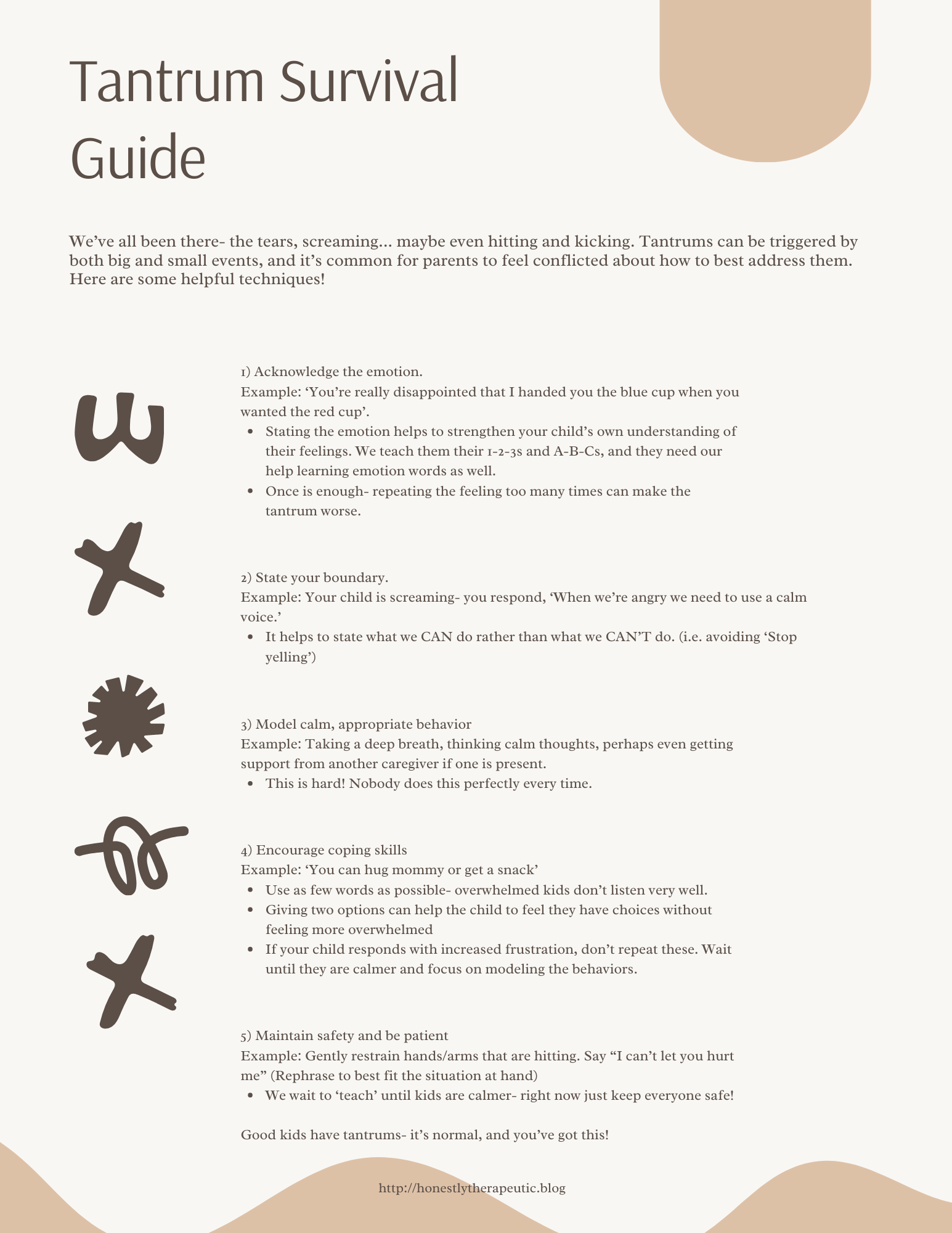
I’ve found that effectively supporting children through tantrums begins with digging deep, and first finding a way to keep yourself calm. I spent some time putting together the ‘Tantrum Survival Guide’ as a sort of quick reference guide for parents. Please feel free to download it below if you find it helpful- here is a preview:
If your child’s tantrums seem especially intense, frequent, or long lasting, I suggest seeking professional help. I recognize that every child is different, and, while I truly believe in the ‘steps’ from this ‘Survival Guide’, some kids need a little more support. For example, children who are neurodivergent often need a more tailored approach. Always trust your gut as a parent, and be open with your child’s pediatrician, therapist, or other support persons if you feel that you need more help.
 Honestly Therapeutic
Leave a comment