When most people think of therapy, they picture something like this: a couch, a person talking about their feelings, and a therapist nodding and asking thoughtful questions.
But if you’re seeking therapy for a child — especially a younger one — you’ll quickly find out that traditional “talk therapy” often isn’t the best fit.
That’s where play therapy comes in.
What Is Play Therapy?
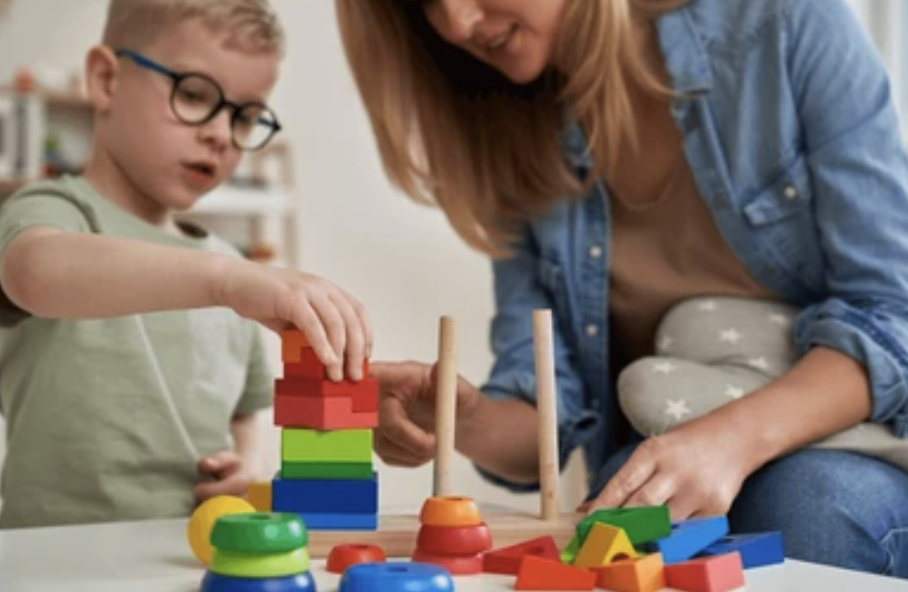
Simply put, play therapy uses play — toys, games, art, storytelling — as the main way children express themselves, process emotions, and build coping skills.
Play is a child’s natural language.
While adults may sit and talk to heal, children play to heal.
Play therapy isn’t just “playing” in a random way. A trained play therapist uses special techniques to:
- Help kids explore feelings they might not have words for
- Understand their inner world and experiences
- Build emotional regulation skills
- Heal from trauma, grief, anxiety, behavioral struggles, and more
Why Play Instead of Talking?
Young children don’t always have the ability to sit still and articulate:
“I feel anxious because of my parents’ separation.”
or
“I’m acting out because I don’t feel safe.”
Instead, their feelings show up through:
- The way they interact with toys
- The stories they tell while playing
- Their choices, patterns, and behaviors during sessions
Through play, a therapist can learn so much more than a child could explain verbally — and can meet the child where they naturally are.
Different Styles of Play Therapy
Good play therapists are flexible!
Depending on your child’s needs, the therapist might be:
- Directive: Offering specific activities and guidance (especially useful for trauma or when a child needs more structure)
- Non-directive: Letting the child lead, express, and explore at their own pace
- Art-based: Using drawing, painting, or crafts to help children externalize and process feelings
- Games-based: Building skills like frustration tolerance, teamwork, or emotional expression through cooperative games
- Limit-setting: Teaching emotional regulation and appropriate boundaries, while still maintaining a warm and safe environment
Every session is thoughtfully crafted based on what your child needs that day.
Play Therapy Can Be Powerful for Trauma
When kids experience trauma — whether big or small — it often lives in their bodies and subconscious minds.
Through play, kids can reenact, process, and work through tough experiences at a pace that’s safe for them.
A trained therapist carefully watches for patterns and themes and supports healing, often without the child needing to relive trauma in words.
But Here’s the Important Part: Parent Involvement Matters
Play therapy is amazing — but it’s not a magic wand where you “drop off your child and pick them up healed.”
Parent sessions are critical to success.
Through parent check-ins, the therapist will:
- Keep you informed on your child’s emotional development
- Teach you how to support regulation and coping at home
- Help you understand what’s really going on underneath behaviors
- Partner with you to make consistent, meaningful change outside the therapy room
When parents are involved, the healing power of play therapy grows exponentially.
Final Thoughts
If your child is struggling — whether with big feelings, behavior, grief, trauma, or just life transitions — play therapy offers a developmentally appropriate, compassionate path toward healing.
By meeting kids in their own language, we give them the chance to heal, grow, and thrive.
And when caregivers walk this journey with them, the results can be truly transformative.
Thinking about starting play therapy?
I’m happy to answer your questions, or help you find the right fit for your family!
 Honestly Therapeutic
Leave a comment